
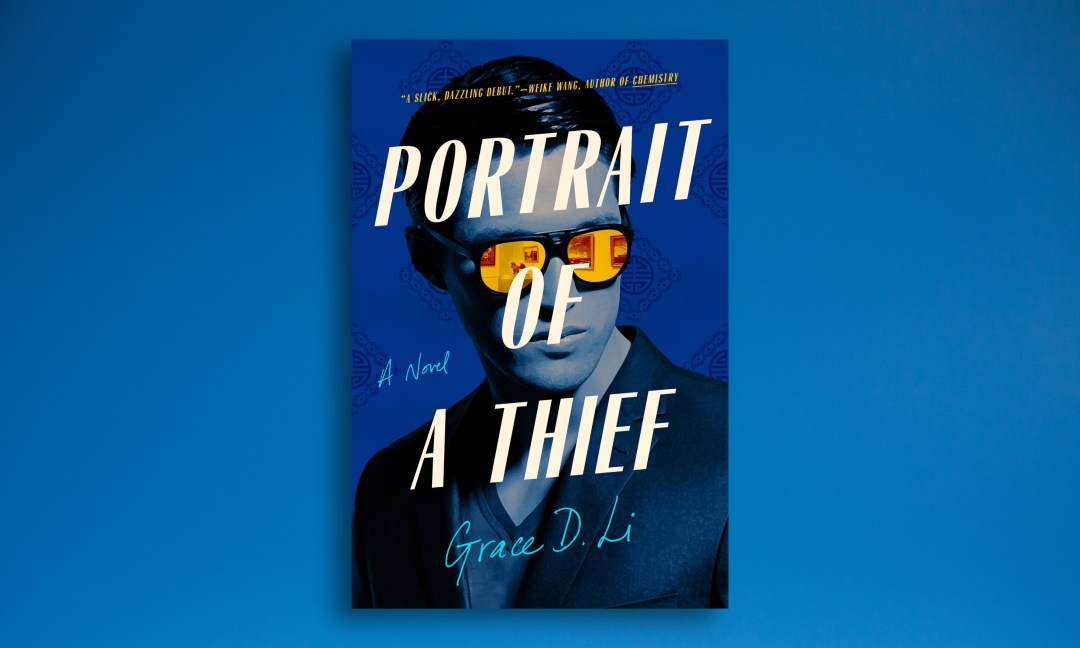
For many readers, international art heists and motley crews bring capers such as Leigh Bardugo’s Six of Crows or Ally Carter’s Heist Society to mind. Naturally, there’s an expectation there; promises of action-packed Ocean’s Eleven-style antics lingering beyond the first page.
Those coming-of-age crime sprees typically come on the cusp of high-octane conflict and slicing banter. But, Portrait of a Thief by Grace D. Li is not your typical heist adventure.
It’s aloof and polarizing. It mirrors the Westernized culture of “civil” looting across a global playing field of righteousness. The novel’s purpose is not to entertain or toy with its readers but to enlighten us on the real criminals of the art world through thoughtful commentary. But like all the good heists, the thieves are the real masterpiece.
The book juggles multiple POVs, and the chorus of young voices never feels overwhelming. The joint struggle to feel at home when their identities are split between America and China drives this plot forward. The scenery of posh capital cities and European architecture come to life through their reflective accounts, calling on the whiplash of painful longing and whimsical wanderlust with every new chapter.
It’s easy to get lost in the dream-like narration of this exposition-heavy story rather than irritated by the lack of action. Whether this book sucks you in with its depth or pushes you away with its convoluted storytelling, the heart of these troubled twenty-somethings comes through with a constant desire to be in each other’s gravitational pull. Will Chen’s crew may not have the skills of Ketterdam’s crooked criminals, but they have the camaraderie covered.
It is also refreshing to have a book following college students at such a prolific time in their lives. It’s rare to see our college years reflected so mundanely in adult fiction, but it is just as much a surprise to have a book tackle the high-strung emotions of diving into the workforce.
“For all that people in power claim to care about looting, it doesn’t seem to matter when it’s museums doing it.” ― Grace D. Li, Portrait of a Thief
This coming-of-age tale wields its politically-charged topics of colonization and looting well. Yet, that difficult subject matter appeals to readers on a much more human level through fears of letting go after years of the education system controlling our every decision. Robbing the world’s most secure museums isn’t nearly as terrifying as having to be a person with a voice; to be the generation who challenges the world’s misconceptions. This caper leans into those fears, finding that haunting sweet spot through its double-edged exploration of freedom in our twenties.
Unfortunately, like the young criminals this story enlists, Portrait of a Thief is disappointingly under-equipped to tell a complete, satisfying tale of art theft.
Heists are hard, and writing about them is an even more complex undertaking. The book never entirely eclipses those weaknesses, often overshadowing the heist itself with inner monologues and avoidance. One could see the choice to focus on the people, not the task, as a clever move to lean into the character study Portrait of a Thief is comfortable being.
However, there comes a point when the lack of detail surrounding the robberies themselves gives the impression the story is slightly out of its depth, grasping at straws when it is forced to face the practical applications of a heist caper. In turn, the action is brief and recounted in snippets, giving readers just enough to piece together how these extremely foolish kids managed to rob a high-security museum, or at least think they did.
Portrait of Thief will not outsmart its readers. It will, however, steal a part of your heart with its compelling explorations of art, history, and identity.
—
Want to add this read to your TBR pile? You can find more information and purchase a copy of Portrait of a Thief by Grace D. Li right here!

 coolgirlcritiques.com